When the Business Leaders Become the Bureaucrats
The famous economist Milton Friedman pointed out that in so many cases when you looked at the bios of bureaucrats in regulatory agencies the bios revealed they consistently came out of the very business or industry they were now regulating. He decried this tendency, saying that the chummy relationships between industry and bureaucracy effectively reduced competition to the harm of the public, i.e., consumers.
One can extend Friedman’s contention to say that regulatory oversight can also impede market growth. In the case of low-speed vehicles, the short-distance driving segment is far from being fully exploited, despite the groundswell of consumer interest across the country.
This article takes a critical look at the regulatory environment imposed on LSVs and suggests a necessary focus on changing the environment at the national and local level. The Low Speed Vehicle Dealer Association (LSVDA)is the right organization at the right time to lobby for the change that will expand the market.
When compliance blocks competition:
Overreaching compliance is often a complaint of exporting countries when destinations block importation based on quality control and regulatory standards. This sort of protectionism, just as tariffs and quotas do, curtails supply and thereby curtails market expansion in a competitive environment.
NHTSA’s regulations with regard to LSVs, unfortunately, do tend to limit market expansion in at least two ways:
• Regulate speed limits to 25 m.p.h. substantially below average driving speed on streets and roads with speed limits of 35 and 45 mph.;
• Inhibit importation of small electric vehicles that are already in foreign markets.
Moreover, the vehicle categories set up by NHTSA create a sharp disparity between conventional automobiles and LSVs, which lacks a middle ground in terms of performance and safety that would otherwise allow more vehicle types and result in pollution-free market growth.
Suggestions for lobbying efforts: Where should the focus be?
A major concern at both the national and local level is the operational safety of LSVs. This, despite the fact that golf car-type vehicles have been steadily upgraded with turn signals, back-up lights, back-up cameras, and three-point seatbelts. Nonetheless, compliance with NHTSA regulations with regard to product operational safety is important. In this case the lobbying effort is mainly directed toward dealers and manufacturers.
The question is whether concern for safety is inhibitory to growth when it comes to speed limits and public road access. The effect of regulatory compliance in this regard is to protect the status quo to the benefit of domestic manufacturers and their dealer networks. Meanwhile the emobility market overall continues to expand in less regulated categories such as ebikes, e-cardo bikes, scooters, skateboards, and mopeds.
It seems that a reasonable goal of lobbying efforts with regard to LSVs would be to liberalize some of the current NHTA regulations. How might this be done?
European vehicle classifications
European vehicle classification offers a flexible mode of vehicle types that could be emulated in the United States. In the quadricycle category are the L6e and L7e, light and heavy small electric four-wheel vehicles, respectively. These categories most closely match the attributes of LSVs and medium-speed vehicles (MSVs) in the U.S.
While MSVs are capable of higher performance than LSVs, in particular higher speeds, they have not been specifically defined by NHTSA as a vehicle category and are, for the most part, constrained to LSV performance guidelines. This probably accounts, in large part, for the fact that MSV-specific vehicles are not manufactured in the U.S. (One Chinese manufacturer, Evolution, is the only brand that sells a specifically labeled MSV in the U.S.)
Thus, one goal of the LSVDA lobbying efforts at the national level could be directed to establishing a new official MSV category with higher performance capabilities. The combination of official recognition and upgraded performance would very likely lead to a market expansion.
The deadweight of a legacy identity
One of the barriers to market expansion is not only limited performance characteristics, but also a historical identity with the sport of golf. Many dealers still refer to their business as selling golf carts. The European classifications have given birth to popular names for the L6e/L7e vehicles, such as “microcar”, “minicar”, and even “UMV” (urban mobility vehicle).
Of course, a little restyling would help as well.
Examples of European styling
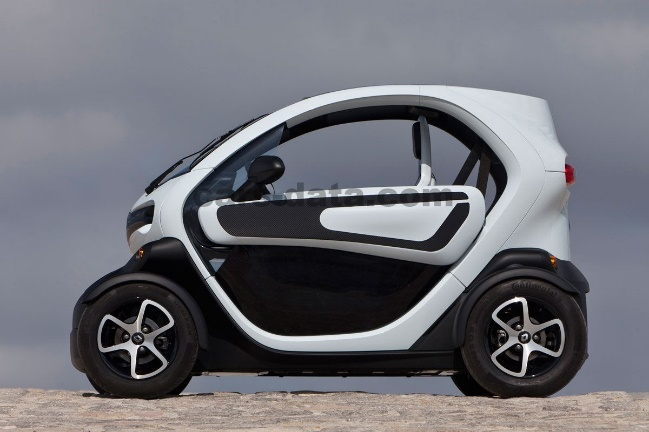
The Twizy, a Renault brand has been sold in Europe for a while and is pictured below. Note that it is fully enclosed, thus fully weatherized. The teardrop styling is also a trademark of European styling, although boxier styles are also available.
In addition to the Twizy another Renault brand is the Mobilize Duo, pictured below in two versions, one for the consumer market, the other more for commercial use.
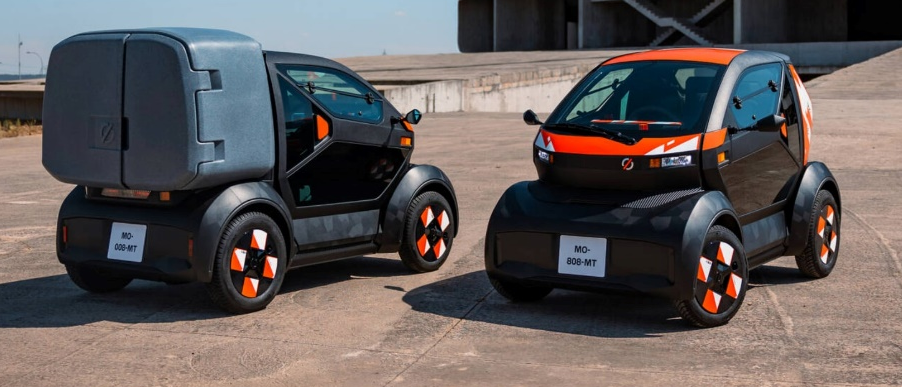
Adopting these styles means breaking the mold and leaving behind the golf legacy that tends to limit both consumer acceptance and the regulatory mindset of officialdom at the national and local levels.
A U.S. start-up in the making
A Twizy look-alike is currently in prelaunch mode. This is the Eli Zero with headquarters in Los Angeles. Although their headquarters are listed as in Los Angeles, the vehicle is manufactured in China. It is possible that the vehicle would not be classified as an LSV and thus escape the anti-dumping countervailing duty penalties now being levied on LSVs. We will be monitoring developments regarding this vehicle.
It is highly likely that vehicles like the Zero, with quite different styling from the traditional LSV, especially under the banner of a newly defined vehicle category, would do well in the short-distance driving segment.
To conclude, then, the LSVDA would do well to lobby NHTSA for an additional MSV or microcar classification. This would not only open up the short-distance driving segment but also lend itself to furthering other important policy goals, such as reducing carbon emissions.