Unshackling the Regulatory Constraints on Low Speed Vehicles
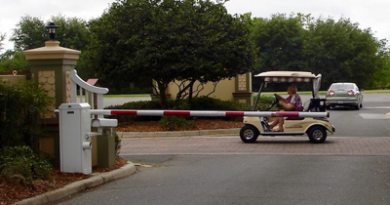
One evening recently, as I was at an intersection, awaiting a green light, I spotted a low speed vehicle coming in the opposite direction and making a left turn in front of me. What was unusual was that we were on U.S. Highway 441. LSVs are a common sight in the city streets of Ft. Lauder dale and West Palm Beach, but not on a major highway such as 441.
LSVs are confined to public roads with a posted speed limit of 35 mph or low in most areas, both in Florida and around most of the country. So, the vehicle and its driver were in all likelihood in violation of this standard. While it is possible that 441 can be traversed at an intersection, in this case the vehicle had been moving on the highway, not just traversing it.
Are current regulations constraining market growth?
It may be a stretch to advocate LSV access to major highways like 441, but is there not some middle ground between the current constraints and the extreme of highway use? The purpose and motivation for answering this question is to extend the market for LSVs and enhance sales and profit outcomes for dealers.
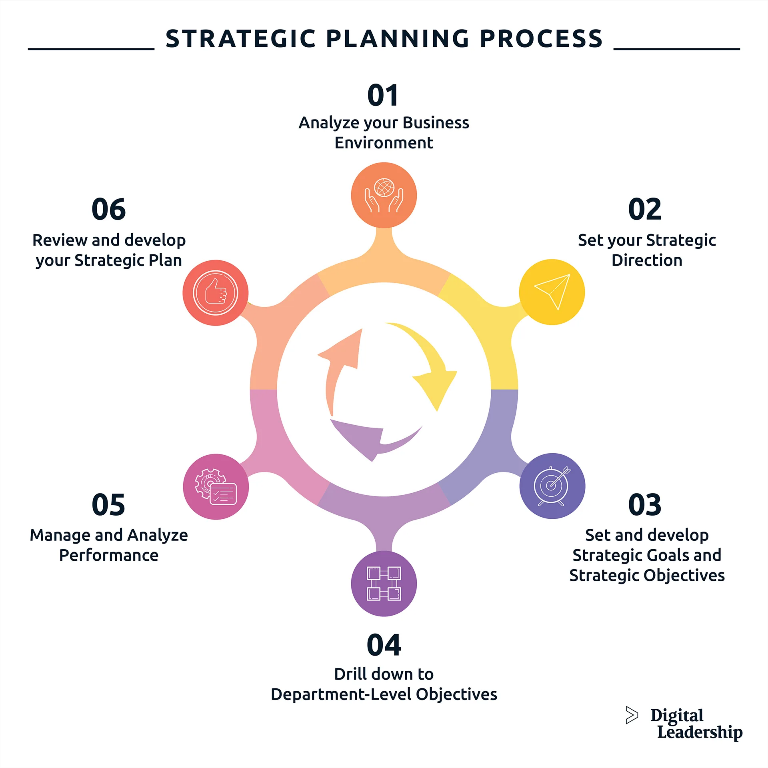
How might an advocate organization approach the issue of broader access to public roads? Here are some key points with regard to strategy, focus and implementation:
• Recognizing that traffic regulations are largely determined at the local level, meaning county and municipality, understand what departments or governmental divisions are concerned with planning the area’s transportation network;
• Because the emobility universe, two-wheel and four-wheel, is growing rapidly, many local governments have a specific division or executive in charge of that sector;
• What is the current plan and outlook for e-mobility, and, in particular, LSVs? Find out and determine what changes would benefit LSV use and market growth.
• Find out if there are other advocacy groups interested in e-mobility and how one could collaborate with them;
• Engage local area LSV dealers and find out their views on the market areas they serve.
Bring the research together and map a strategy for market growth
Points for discussion with public officials
One of the basic assumptions is that you know which public official to speak to. Actually, even at the local level, various departments often have overlapping responsibilities. In Palm Beach County, Florida, at least three departments have charters of responsibilities that would impact LSV access to public roads. These would be the County Engineer and other officials of the Engineering & Public Works Department, the Transportation Planning Agency, and district commissioners within Palm Beach County. It goes without saying that the sheriff’s department and the municipal police department would have a keen interest.
The complexity of interests at the local and county level is only magnified at the state level. In addition, because much of the regulatory environment is controlled at the local level, what is allowable in one district may be prohibited in another. Thus, effective strategies may well require a regional approach across contiguous local political jurisdictions.
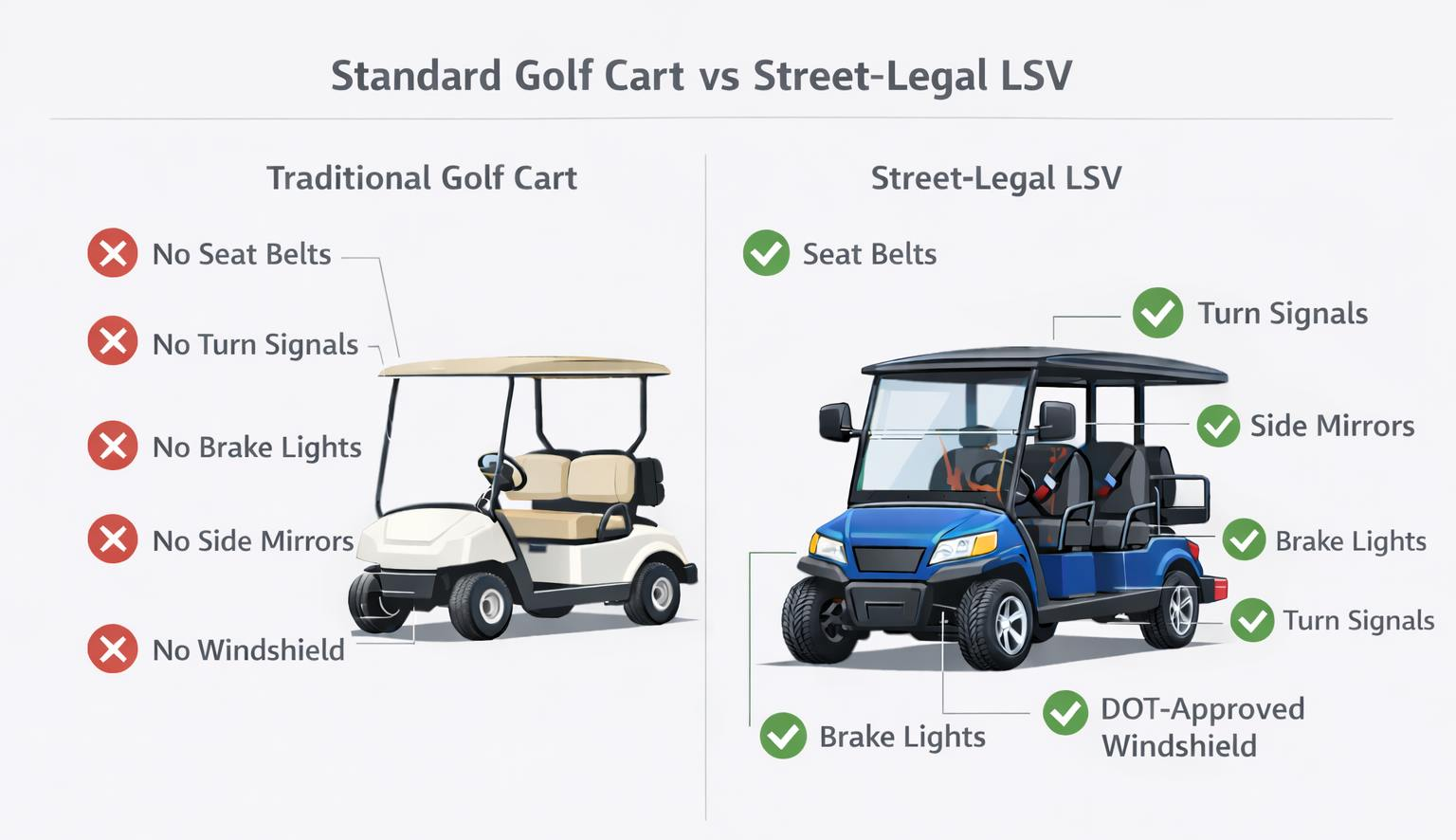
Finally, it is important to realize that many public officials do not have a very good idea of what the key features of an LSV are—particularly with regard to safety features. This stems from the vehicle’s legacy of use on a golf course. Moving from golf course to city streets is a major shift in use and requires a major shift in public image. It may well be beneficial to organize a “show and tell” for public officials, bringing them in direct contact, view, and operation of industry-leading LSVs.
Be aware of seemingly unrelated trends in policies
Cities and municipalities are evolving rapidly in the United States. During and even prior to the COVID pandemic, cities experienced a major outflow of population and the displacement of office space to the suburbs and home offices. That trend is continuing, although offset by the conversion of vacant office buildings into residential apartments in some major cities.
The conversion of office space to residential dwellings implies a significant change in product type and deliveries to consumers, who are now householders rather than businesses. The New York City trial of microhubs and last-mile delivery systems is, at least in part, a recognition of changing demographics occasioned by the City’s building conversion plans.
Another structural change: Minimizing parking space requirements
Another change that is taking place in local jurisdictions across the country is the change in zoning laws to reduce or eliminate parking space requirements. This, in the quest for more affordable housing, A current political issue. The implication of this is more densely populated areas within municipalities and more reliance on alternative forms of transportation in place of conventional automobiles.

Clearly one form of alternative transportation would be LSVs, either privately-owned or in on-call fleets. The change in parking requirements and the consequent increased development of multi-family dwellings further enhance the prospects for the short-distance driving market, which has been the subject of several previous articles. (Note also that this regulatory change will encourage the development of microhub systems.)
The key advocacy role of the Low Speed Vehicle Dealer Association
While these changes and trends in the urban environment may seem slightly futuristic in terms of the impact of the market for LSVs, the time is now to begin cultivating relationships with officials that are spearheading the changes discussed. Here is where the Low Speed Vehicle Dealers Association (LSVDA) can play an important role.
Membership in the LSVDA assures dealers and suppliers that the potential for market expansion is being focused on. Dealers thus have an advocate to ensure they have a place at the table as broader changes impact the scope of their potential market.